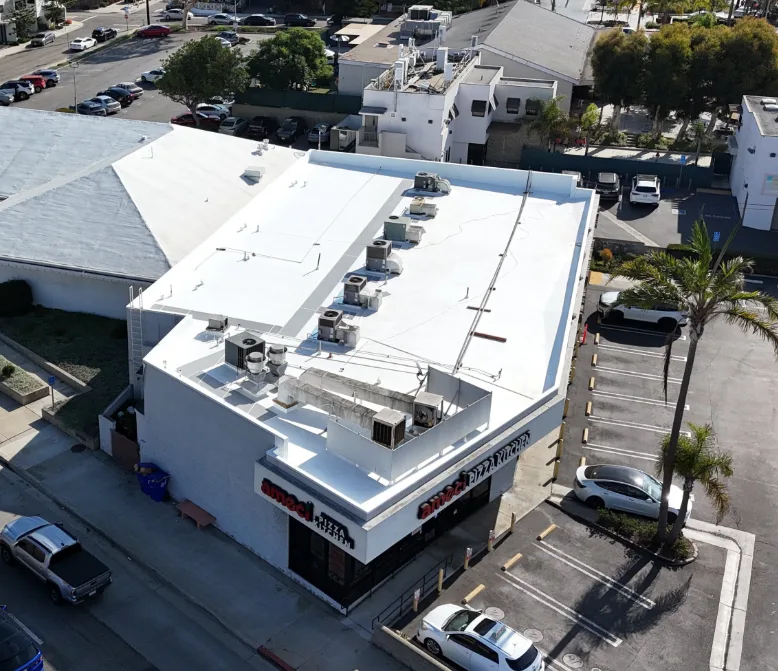
One Reflective Sheet, Welded Into A Continuous Surface.
TPO is thermoplastic polyolefin, a single-ply membrane, usually white, manufactured in wide rolls with a reinforcing scrim in the middle. It rolls out over the roof and the overlaps get heat-welded, so adjacent sheets fuse into one continuous piece of material.
It's built for flat and low-slope roofs with large uninterrupted areas: warehouses, retail boxes, light industrial buildings, and any structure across Los Angeles or Orange County where a bright reflective surface pays for itself in cooling load. Wide rolls and welded seams mean fewer seams per square foot than almost any other system.
The white surface is the other half of the story. TPO reflects most solar energy instead of absorbing it, which makes it one of the most direct routes to Title 24 cool-roof compliance in California.
Attachment Method And Thickness.
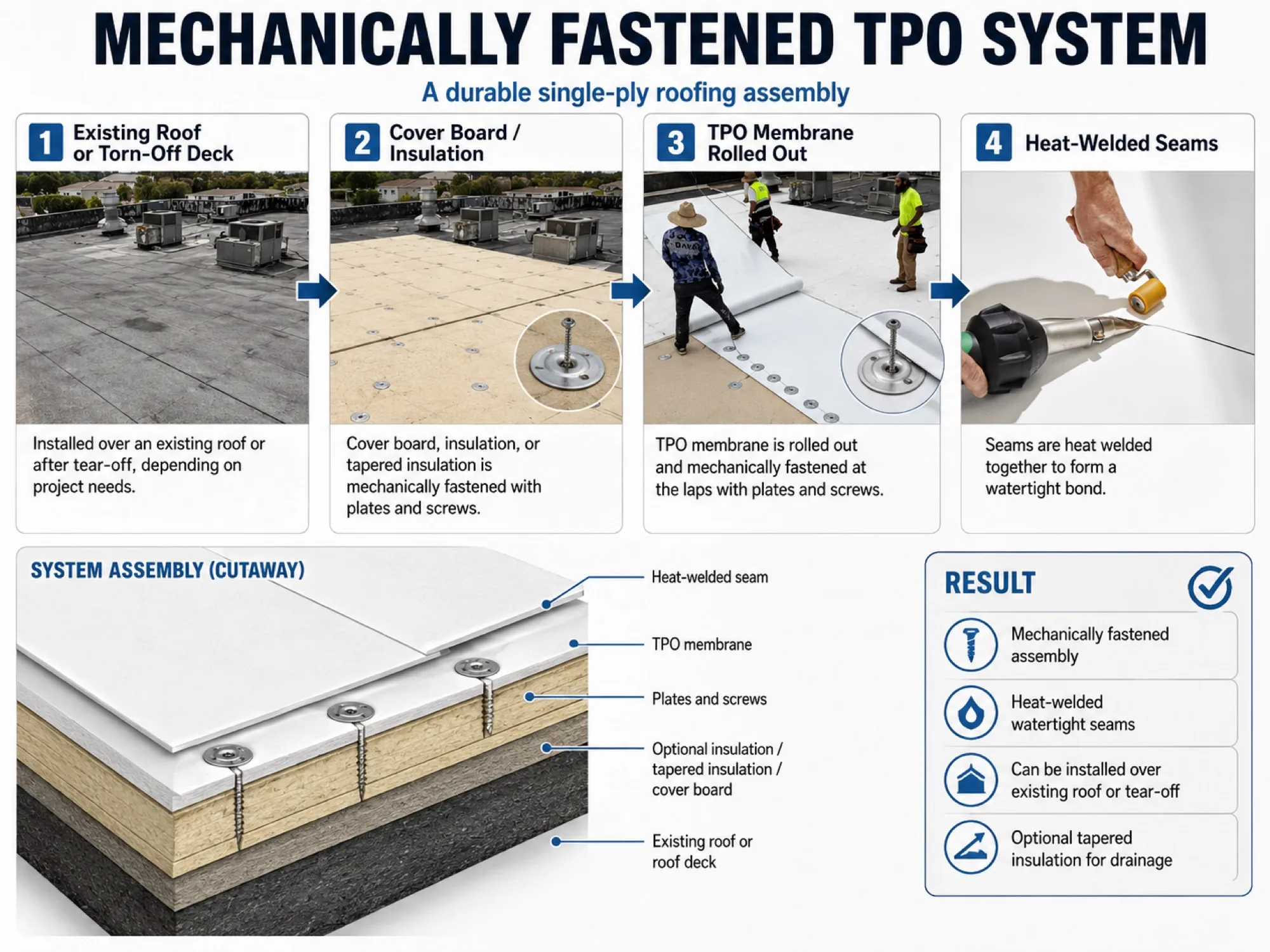
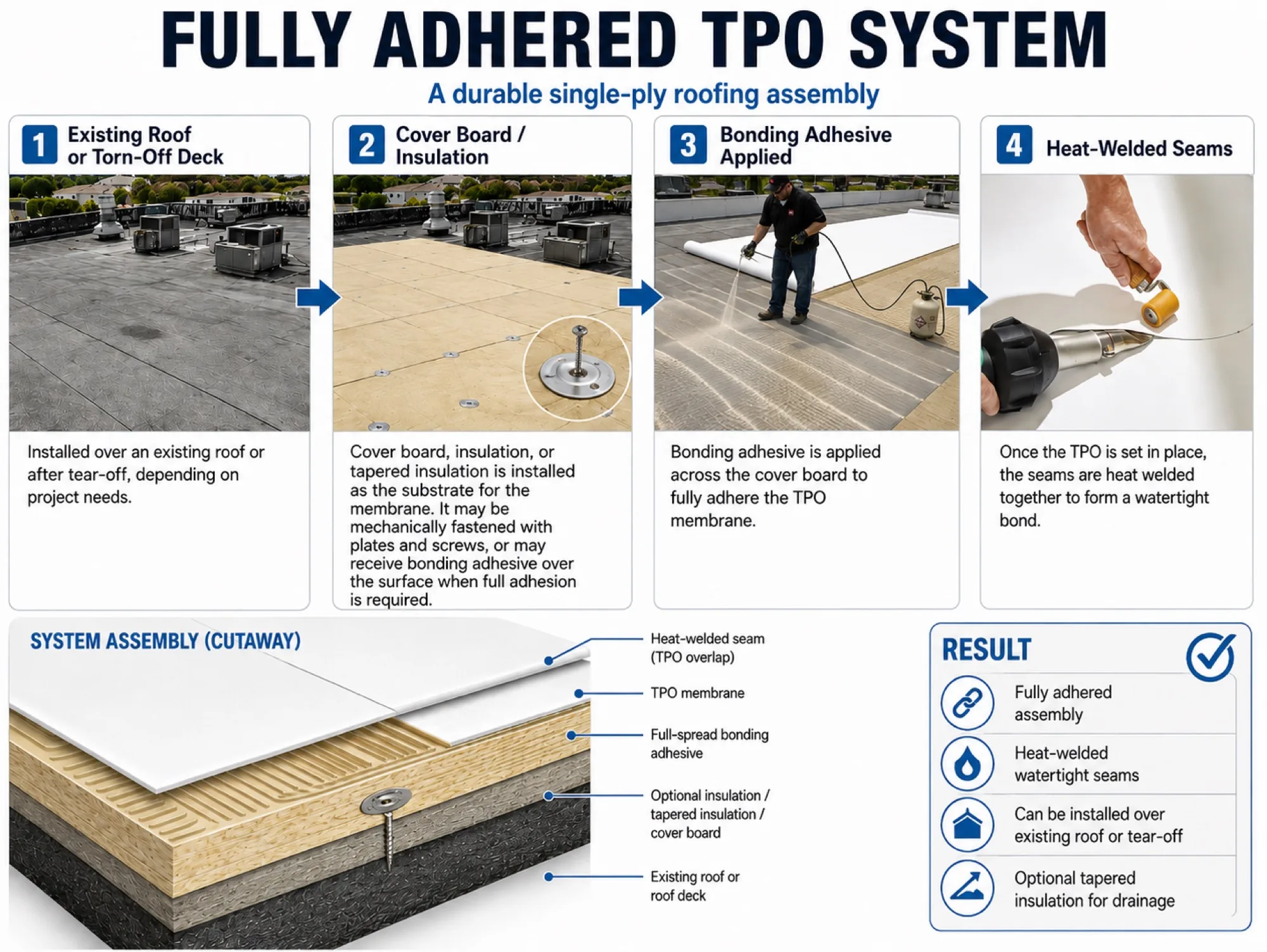
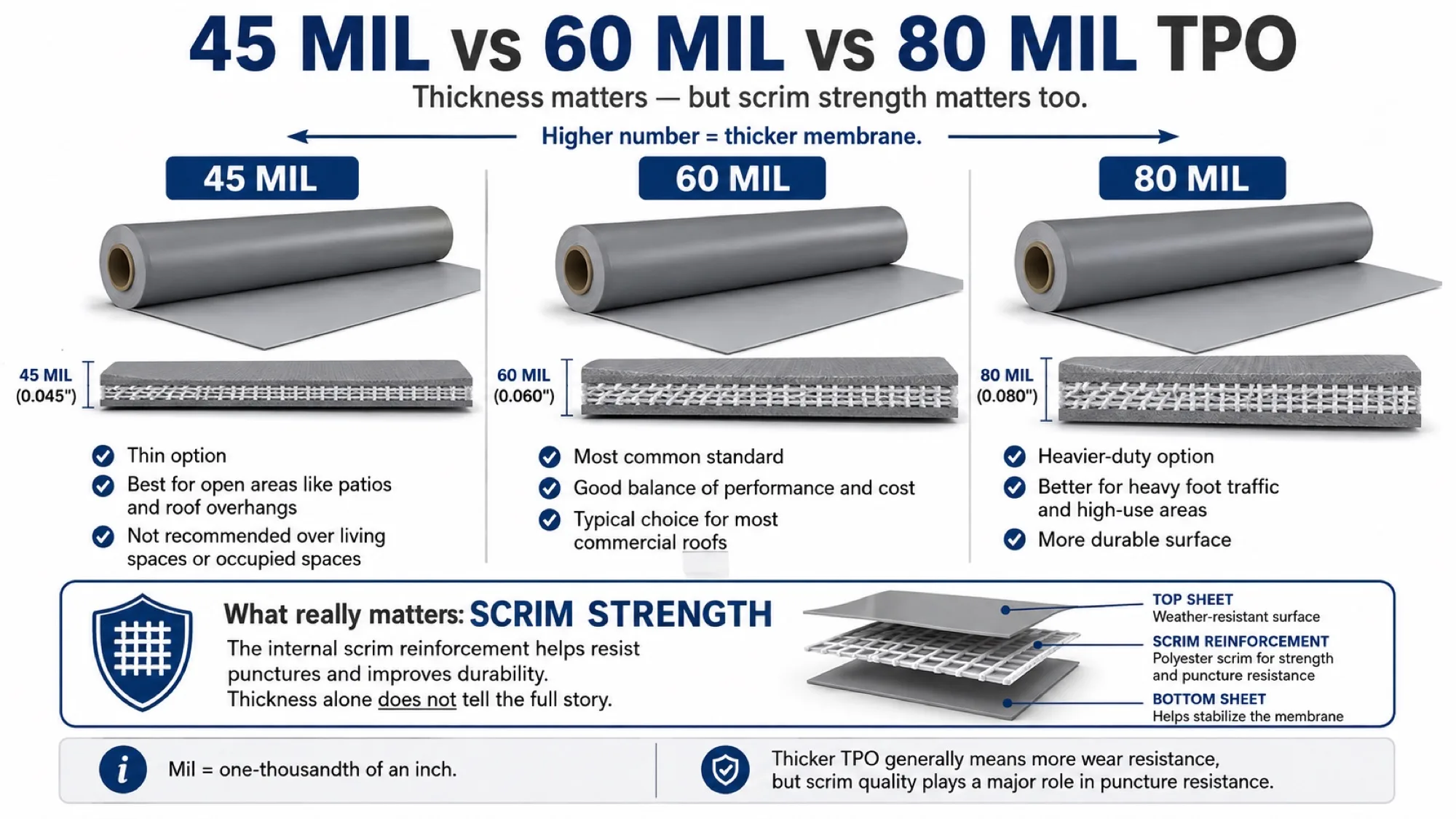
What A TPO Roof Gives You.
Serious heat reflectivity
How: The white membrane is CRRC-rated and reflects most incoming solar radiation instead of storing it in the deck.
Which means a lower cooling load, a cooler building, and Title 24 compliance without needing a separate cool-roof strategy.
Welded, monolithic seams
How: Overlaps are hot-air welded so the sheets fuse chemically into one continuous membrane across the whole roof.
Which means the seams end up as strong as the field itself. A welded seam doesn't dry out and let go the way an adhesive one eventually can.
Fewer seams to begin with
How: TPO comes in wide rolls, so a large roof gets covered with far fewer overlaps than a multi-ply system would need.
Which means fewer potential failure points across the whole roof, and faster installation on big commercial fields.
One Membrane, Welded Into Place.
TPO installs quickly, but the real quality gets decided at the substrate and at every place the membrane stops: parapets, curbs, drains, and penetrations.
Installed by manufacturer-certified crews to the specified thickness, TPO systems carry manufacturer warranties up to 30 years, including No Dollar Limit coverage, alongside our own workmanship warranty on every TPO roof in Los Angeles and Orange County.
Three Steps… That's It.
Get a free quote
We survey the roof for trapped moisture, calculate the wind uplift requirement, and write a scope with thickness and attachment method specified.
We handle it
Tear-off, insulation and tapered drainage, cover board, membrane, welded and probe-tested seams, and all terminations.
A warrantied cool roof
A registered NDL warranty, CRRC documentation for compliance, and full as-built records.
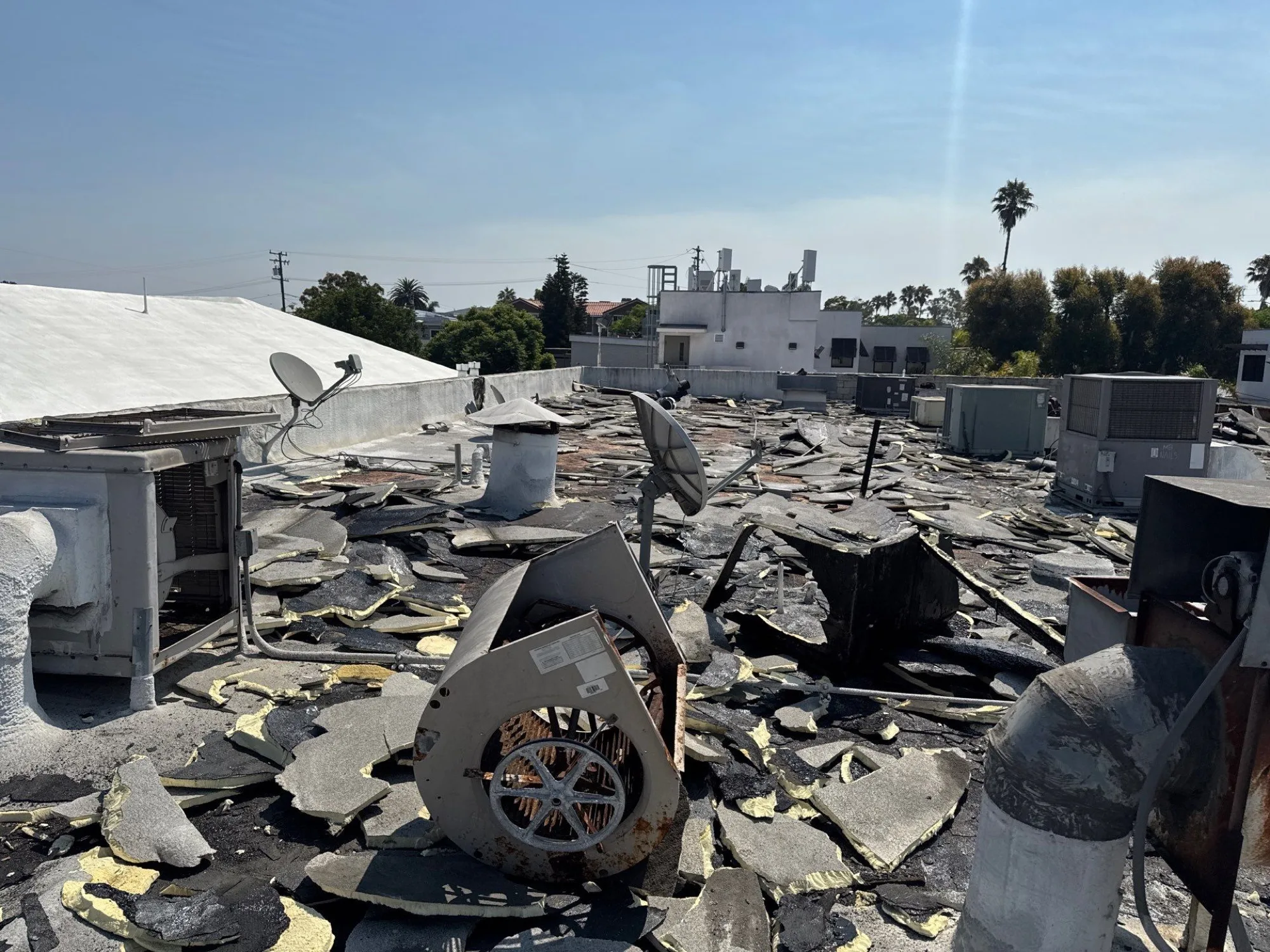
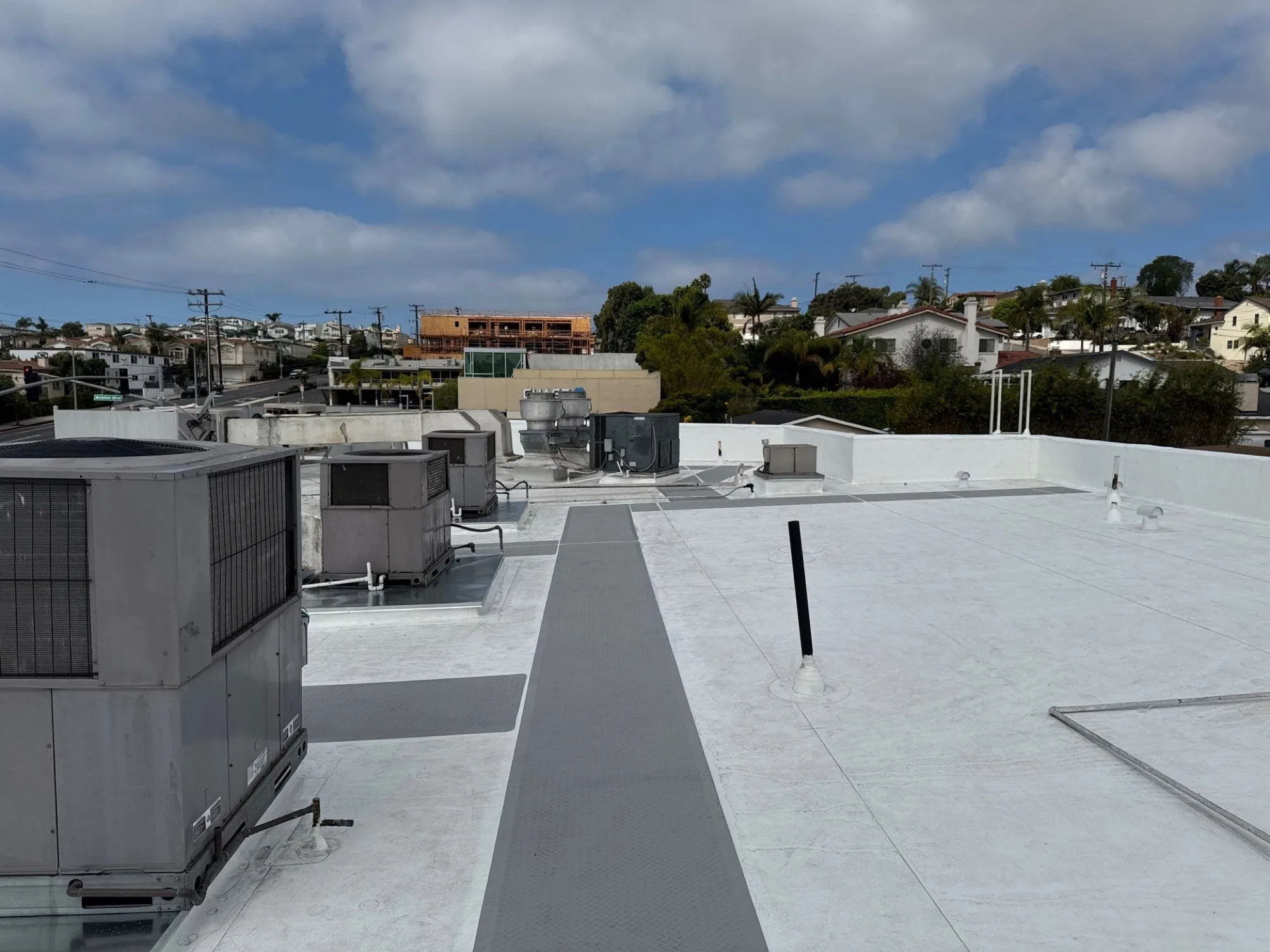
A Warehouse Roof Converted To 60 Mil TPO.
“They pulled the permit and picked a CRRC-rated assembly before I knew it was a requirement.”
Get A Free Quote.
We'll survey for moisture, run the uplift calculation, and quote the thickness your roof actually needs, anywhere in Los Angeles or Orange County.